Announcement

Collapse
No announcement yet.

Oil cooler diverter valve

Collapse
X
 
  • Filter
  • Time
  • Show
Clear All
new posts

    #91
    :ban:
    Originally posted by lawsy View Post
    Ask him about the 4.10 diff:notworthy:

    :ban::ban::ban:

    Comment


      #92
      Originally posted by lawsy View Post
      Ask him about the 4.10 diff:notworthy:
      He'd be fucked in Thailand, literally:wink:

      Comment


        #93
        Hi,

        Quote, ''Gorilla could exhaust gas temps cause a problem at WOT?''

        For sure, as Mr Lawsy says you do not want
        it, but if I am correct I think Shimmy was/is
        running std Map etc.

        As a side note on the E30 M3 with S54 CSL
        engine I used an 3 core water rad with approx
        35% more surface area than the std version.

        But I also ran 2 x Heat exchangers and it was
        dry sumped so the oil lines helped to dissapte oil
        heat, but getting that engine over 100 deg
        oil temp even with 28c plus ambient air was virtually
        impossible, and water was always around 80/85 ish.
        no matter what your driving style was.
        [coolant was approx 30% Anti freeze 70% water]

        Regards,

        The Gorilla.

        Comment


          #94
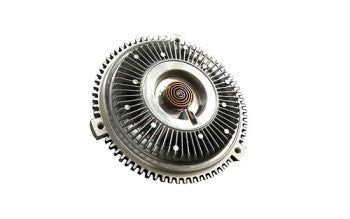
          Any views on this?
          When you push your powerplant, thermodynamics pushes right back. The toll of high performance is higher heat load and many stock components begin to complain. This upgraded fan clutch increases viscous coupling of cooling fan blade speed to water pump speed, yielding increased airflow through the radiator for more effi

          Comment


            #95
            Originally posted by Mike R View Post
            Which is faster mike, a fan pulling air through the rad, or driving at 120mph with the air pushing through the rad at that speed?

            Comment


              #96
              Ps the fan will be less efficient than the air pushing through when travelling at approx 20-30mph

              Comment


                #97
                So remove your viscous and as long as you are not in traffic it will only benefit. Less drag on belt system. :thumbs:

                Comment


                  #98
                  Originally posted by lawsy View Post
                  Which is faster mike, a fan pulling air through the rad, or driving at 120mph with the air pushing through the rad at that speed?
                  I don't believe any one has complained of suffering from a hot engine doing a steady 120mph .

                  From my understanding, this uprated viscous coupling is supposed to speed the fan up at lower engine rpms, where doing so is alleged to remove the heat out of the system when the normal arrangement would have slowed down (i.e in the corners), which is supposed to help the thermal recovery prior to the next high loading on the straights?

                  Makes sense to me, but I was more wondering if anyone had tried it for a real world opinion.

                  Comment


                    #99
                    Originally posted by Mike R View Post
                    I don't believe any one has complained of suffering from a hot engine doing a steady 120mph .

                    From my understanding, this uprated viscous coupling is supposed to speed the fan up at lower engine rpms, where doing so is alleged to remove the heat out of the system when the normal arrangement would have slowed down (i.e in the corners), which is supposed to help the thermal recovery prior to the next high loading on the straights?

                    Makes sense to me, but I was more wondering if anyone had tried it for a real world opinion.

                    Mike you are missing the point that the fan will not pull more air through the rad, than the air passing through at say 30mph

                    After 30mph the viscous will do fuck all.

                    Comment


                      And the water temp rising is high speed WOT application. Ease of throttle and it instantly drops.

                      Comment


                        I'm only throwing ideas out there artyman:.

                        The standard arrangement is supposed to be 3000cfm as is the SPAL, but I image that the standard arrangement is its peak, where the SPAL does this as soon as it comes on, so perhaps it is this fact that causes improved heat recovery that the Yanks are mentioning.

                        Think about it logically, WOT, huge thermal loads, come to a corner, reduced revs, reduced fan efficiency and then WOT again, so continue this for several laps and gradually the thermal load overcomes the cooling.

                        However change the set up so that the 3000cfm is running all the time, the car slows down at the end of the WOT, but the cooling remains constant, it recovers briefly, then WOT, huge thermal load, followed by brief recovery and repeat. Perhaps it is the way the standard set up works in that it doesn't allow that brief recovery (instead, it's actually putting even more thermal load into the engine), as instead of a period of high flow at the end of the WOT, it is getting a reduction of flow as the rpm drops.

                        So maybe an electric water pump and an SPAL fan would be the cure?

                        Comment


                          Remind me of what happens to the a/c fan and viscous fan at different temps and speeds.

                          Obviously the viscous fan stops pushing air once it cools (e viscous bit) and doesn't the a/c fan stop running above certain speeds ?

                          Comment


                            Just checking Alexk old post and Auxillary fan (fitted to both a/c and non-a/c cars, builds up but then stops working at 87.5mph. Above that speed it I guess revolves and is driven partly by the air speed of air entering the car grille.

                            When does Viscous fan start/stop running?

                            Comment


                              Originally posted by shimmy View Post
                              Remind me of what happens to the a/c fan and viscous fan at different temps and speeds.

                              Obviously the viscous fan stops pushing air once it cools (e viscous bit) and doesn't the a/c fan stop running above certain speeds ?
                              I'm new to CSLs so can't give that info LOL.

                              If it was for Cossies though, that would be easy (but it uses an electric fan as standard, which I have upgraded to higher flow SPAL items). And it is purely temperature controlled.

                              The Escort one comes on half speed at 93 deg and then full speed at 99 deg (switching back off at 87 deg). This is because being a newer car than the original Sierra, it is subject to more strict emissions regulations, so is deliberately run hotter. However, this causes overheating on track, as it allows the water temps to get too high because the fans come on ful speed too late.

                              The Sierra runs a single stage fan switch, which comes on full speed at 93 deg, so we fit these to the Escorts, which maintains the temps at an acceptable level for much longer.

                              I'm sure you're now going to educate me on how the BMW arrangement works, which is going to blow my theory out of the water LOL.

                              Comment


                                Mike

                                See other thread, I wasn't trying to catch you out, I'm not technical enough to know or remember tbh.

                                I think froUS forums they overcome the problem by ditching viscous fan, removing electric and fitting a high speed SPAL That is controlled by temp level s(and doesn't go off at speed)

                                But they do then occassionally get overheating at low speeds/traffic in hot weather.

                                Comment

                                Working...
                                X