
For what it's worth, I just wasted the better part of two months chasing issues with my CSF radiator and high coolant temps on track. I swapped back to a brand new BMW OEM radiator and it instantly solved the issue.
-
Hi everyone, I'm so glad I found this post. I have a 2003 M3 that I use for mostly track driving.
I have the same exact symptoms as was BigRussia describing. The car never overheat in traffic or any other condition, however at the track, only after a few laps and it goes past the half point.
So far I upgraded both radiator and oil cooler to CSF, replaced WP, thermostat and fan clutch. Pretty much every component in the cooling system, and still things have not gotten any better. I also thought I had head gasket issue, but my mechanic checked and confirmed no issues there.
Now what's interesting, is that I also have the TTFS tune (after install of euro headers). In addition, last night I used the OBD port to check coolant temps, and I see that temp gauge goes beyond the half point at around 205 degree, is that considered over heating? is there any buffering in the stock temp gauge that possibly the TTFS tune removed?
I hope someone can help figure this out..Leave a comment:
-
Nope, never turned on the AC during these track days. Car does has full AC system as its still mostly a street car.Originally posted by Fresh1179 View Post
What is DL? Im looking to get something that can give me proper readouts/logs of temperatures so dont have to rely on the factory gauges and have to keep watching them while I'm driving ha.
Might as well give an update for the thread as well: I still haven't had the time to get the cooling system refreshed My indy is 45 mins away and been working 50+ hour weeks these last few months, no track days planned especially as the weather is getting to sauna mode here. So hasnt been a big priority, but def still top of my mind to get this cooling issue resolved.
Leave a comment:
-
Random Question: Have you removed the A/C from the car? I left the A/C in my track car because I don’t want to transition to a coolsuit just yet because I drive the car 45 minutes to the track and back. Once I fail NC State inspection I will buy a trailer haha.
I personally have only experienced high track temps in the following situation. Sitting in the car in the paddock I turned on the A/C for a couple of minutes while the prior run group exited the track.
About 4 laps in, I was checking my gauges on a straight and noticed that the water temp was climbing towards the “second dot” (I’d have to look back at the DL to see what temps were reached) and noticed that my A/C was still on, I just hadn’t noticed it. I turned off the A/C, put the car in clean air and everything dropped back to normal. Lesson learned.
Sent from my iPhone using TapatalkLeave a comment:
-
providing vacuum to the system and refilling the coolant under vacuum might be a way to clear any air pockets.Originally posted by BigRussia View Post
Also, I modified a coolant cap in my S50 swapped E30 by blocking the bypas vents and adding a tire chuck. I was able to give the cooling system a very slight positive pressure status where I found a small hose leaking at the joint that while static, didn't leak at all. Replacing the hose solved a temp problem I was experiencing.Leave a comment:
-
Bumping this up, haven't had a chance to really touch the car since my last post (just been sitting in the garage gathering dust, no time these days ) but was hoping to have some feedback or inputs since my last post lol. Guess I'll just take it to my indy when I finally have some time and hope he can figure out whats the issue.
Leave a comment:
-
Thanks for this insight! Yeah havent been able to look into the car since my last post, and dont have any track days planned or coming up. Have barely even driven the car in 2 weeks other than to run some errands. But yes hoping I find some small leak I wasnt seeing before and it ends up being that it was the small pressure loses causing the overheating. Thats my first step is have the cooling system fully inspected by my indy since I cant seem to find anything wrong myself.Originally posted by JustAWhisper View Post
And for the guys going off topic on the t-stat operation; my car is a full on street car with a/c, full interior, sound system, etc. Regardless how the t-stat operates I'm not modifying it... I shouldn't have to. My cars just a stock n/a S54 with bolt-ons and tune lmao.
Btw i did post the dyno graph with AFRs.... I dont see any one commenting on that? I figured someone would mention it looks a little lean on top compared to the B-spec baseline tune?
Also could a failing fuel pump cause a lean condition, in turn causing the engine to run hot? So many damn variables...
Leave a comment:
-
Piping in here. I was experiencing overheating at the track late last year and was mystified, much like you. I had already replaced the entire cooling system and figured I was just pushing the car beyond its limits, but it still bugged me because my times weren't much faster than before. Later on, a water leak developed and I discovered the thermostat housing and water pump both leaking. I now suspect that the water pump was just starting to fail which is why I started to see overheating at the track. Those small leaks cause pressure losses in the system which reduces the cooling efficiency.
I think when everything is working, a fully OE system should be able to keep up with all but the most extreme ambient temperatures or a highly modified car. Sometimes stuff fails unexpectedly early (my water pump was only 3 years old with ~20k miles on it), so when you have some time, inspect everything very carefully.
Hope that helps.Leave a comment:
-
You're right and I wasn't thinking clearly.Originally posted by S14 View Post
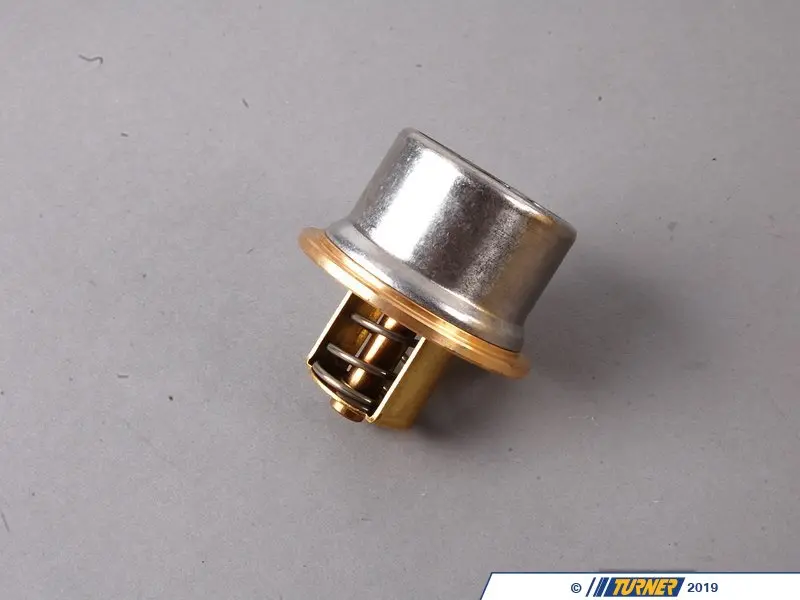
The way it works is the Tstat cylinder moves up and down as a gate to let coolant pulled in by the pump from the radiator return hose (when cylinder is up) or from the head (when cylinder is down) or a mix between the two sources.
To bypass the Tstat one needs to find a PVC tube or thin metal tube with the OD the same as the Tstat cylinder OD which is about 1.9" (to be verified) and cut to 1.8" length. One end of the tube is inserted into the Tstat housing top cover and the other end needs to have a cutout 1" x 1.5" (for radiator returning coolant to be pulled by the pump) as pictured below.
With the tube inserted into the upper cover, it blocked the pump from sucking the hot coolant from the head, and this forces the pump to suck in the radiator cooled coolant in via the tube's 1"x1.5" cutout.
Last edited by sapote; 03-13-2021, 11:55 AM.Leave a comment:
-
It doesn't close off the radiator, but the water chooses the path of least resistance and without the thermostat it will chose to get sucked back into the water pump instead of traveling into the radiator. The thermostat housing has two separate chambers, and upper and a lower. Water exits the engine and travels into the upper housing. From there it can fall into the "closed" or rather compressed thermostat opening, or exit the housing and travel into the upper radiator hose to the radiator, or a combination of both. From the radiator the water travels back to the thermostat housing and into the lower chamber of the thermostat housing. From there, because of the suction the water pump creates, it falls into the water pump and travels back into the engine.Originally posted by tnord View Post
When the engine heats up and the thermostat "opens" it actually raises up, or becomes erect into the upper thermostat housing. As it raises into the thermostat housing it closes off the hot water exiting the engine's ability to fall back into the water pump and instead the route out the upper chamber and into the radiator becomes the lower resistence.
In essence, the function of the thermostat is to divert water flow more than act as a barrier of flow. If you remove the thermostat the hot water exiting the engine will always choose to flow back into the water pump instead of to the radiator.Leave a comment:
-
wait wat?
removing the thermostat in an S54 closes off the radiator? I can't say I've looked at it that closely, but that would surprise me.Leave a comment:
-
The thermostat on and S54 car is not a barrier type thermostat. In the "closed" position, water exits the engine and falls into the hole of the thermostat, back into the water pump and returning to the engine. As the temperature increases, the thermostat rises and closes off the center opening. Water then flows around the thermostat in the chamber of the thermostat housing and passes into the radiator.Originally posted by tnord View Post
Gutting the thermostat isn't really possible, but if you were to remove it, then the coolant would just flow (mostly) from the engine into the water pump and back into the motor which would quickly cause an overheating situation.Leave a comment:
-
For M3, the Tstat is a separate part and so it can be easily removed (after open the top cover) for testing. For non-M cars it's an integral part of the plastic housing.Originally posted by tnord View Post
I agree, remove it and see if the temperature drop to normal or lower.
Leave a comment:
-
I've also seen a TTFS tune with the knock threshold turned way up (i.e. engine allows more knock to happen). It was like 35% higher than stock.Originally posted by Obioban View Post
OP just grab a stock tune from here and flash it on: https://github.com/saildot4k/MSS54-X...20-%20Partials
Make sure to grab the exact same version than what's on your car or you might brick your DME.Leave a comment:


Leave a comment: